Publishing More Videos Is Not a Views Strategy
The advice that gets repeated the most is also the easiest to follow, which is probably why it survives: post more. Post daily. Flood the feed and the algorithm will eventually notice you.
I believed that for a while too. What broke it was watching two channels side by side. One published every day for eight months and finished with a library nobody was recommended. The other published two or three times a month and kept collecting views on videos it had uploaded a year earlier. The gap was not effort, and it was not luck. It was that the second channel knew what each upload was for.
I have been building YouTube channels since 2017, most of that time on faceless channels made for English-speaking audiences. Here is how I think about views now, in the order the decisions actually have to be made.
Where Volume Does Help — and Where It Stops
Let me be fair to the advice first. Early on, uploading frequently is genuinely useful, because you cannot learn packaging, pacing or audience from theory. You need reps. Twenty uploads teach you more than twenty hours of tutorials.
The catch is that reps only teach you something when each one is a different hypothesis. Twenty videos with the same format, the same title shape and the same thumbnail treatment are not twenty experiments. They are one experiment run twenty times, and you already have the answer after the third. That is the exact point where volume stops paying and choice starts.
Decide Who the Video Is For Before You Produce It
The first real decision is which audience the channel serves, and it is worth making deliberately rather than by default.
Advertising budgets are not evenly distributed across the world. Views from markets like the United States, Canada, the UK, Germany and Japan generally sit in higher-value advertising categories than views from many other markets, which means two channels with identical view counts can have very different revenue. That is a real reason a lot of creators build for English-speaking audiences, and it is the reason I do.
It is not a reason for everybody to switch. If you understand your local audience deeply, can serve them in a way an outsider cannot, and can build a community around that, that advantage is worth more than a market with better ad rates and no connection to you. Building for an audience whose language and references you do not really have is a slower, harder path than the enthusiastic posts about it suggest — and revenue depends on far more than which country the views come from. Whatever route you choose, choose it before you produce, because it changes the topics, the pacing and the packaging.
Research the Niche Before You Research the Video
The most common way to waste three months is to pick a topic because it is interesting to you and find out afterwards whether anyone wanted it.
Before producing, spend real time watching the market. Four questions cover most of it:
- Is demand for this subject steady, or was there one spike everyone is still talking about?
- Which new channels in this space have grown recently? Established channels tell you what worked years ago; new ones tell you what is working now.
- What format is doing the work — long-form explainers, compilations, narrated documentary, something else?
- What is the audience actually asking for in the comments of the videos that are winning?
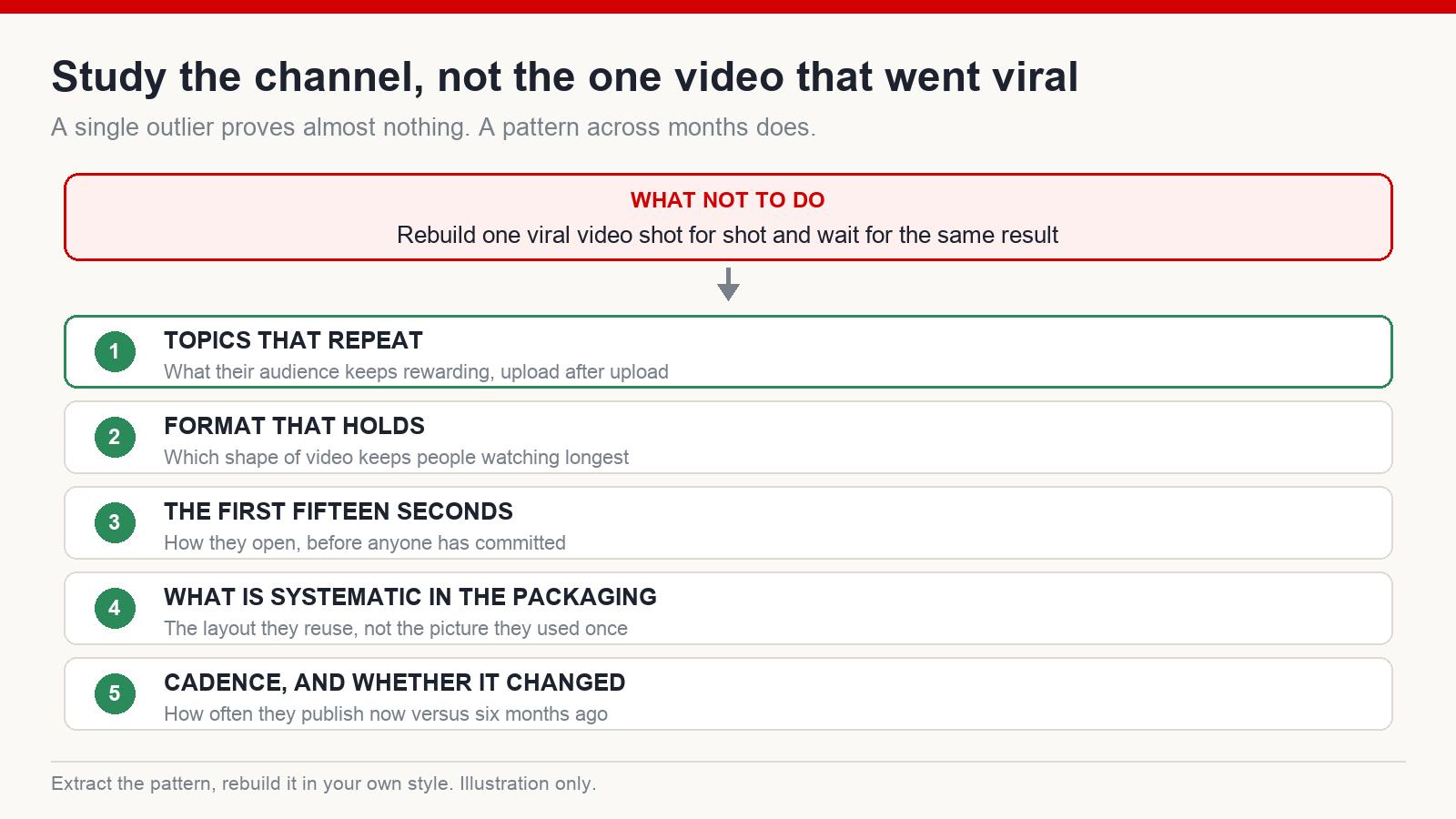
One warning about the first question. A single viral video proves almost nothing. It might be a topic with a durable audience, or it might be one lucky video that will never repeat. Look at whole channels over months, not at one outlier.
The Four-Part Library
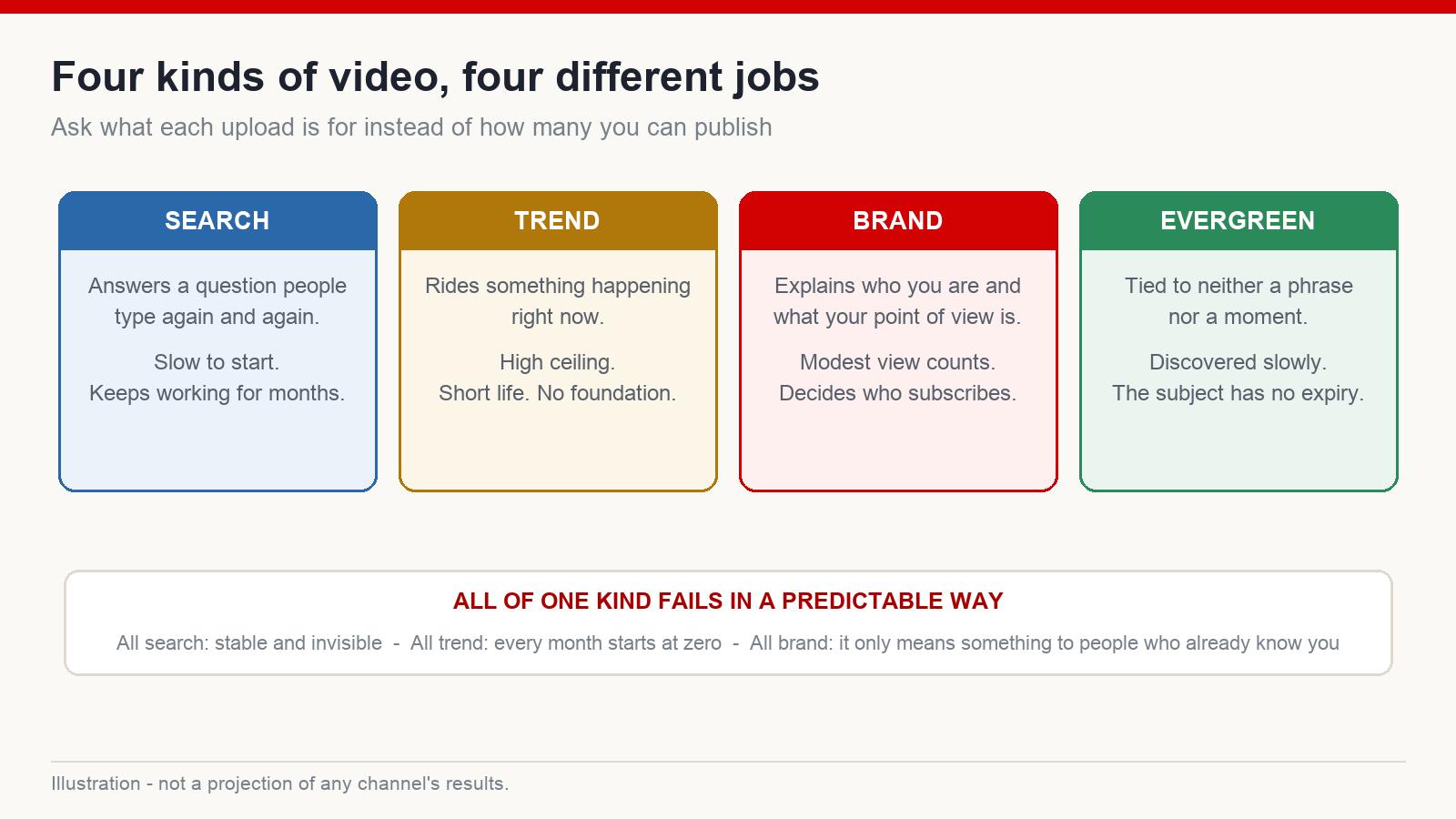
Here is the part that replaced “post more” for me. Instead of asking how many videos to publish, ask what each video is for. Over time, a healthy channel builds four kinds.
- Search videos. They answer a question people type repeatedly. They grow slowly and they keep working for months, because the demand behind them does not expire.
- Trend videos. They ride something happening now. High ceiling, short life, and useless as a foundation.
- Brand videos. They explain who you are and what your point of view is. Modest view counts, disproportionate effect on whether a viewer subscribes.
- Evergreen videos. Not tied to a search phrase or a moment — the ones people keep discovering because the subject itself has no expiry date.
A library made entirely of one type has a predictable failure. All search: stable and invisible, nothing ever breaks out. All trend: spiky, exhausting, and every month starts from zero. All brand: a channel that means a lot to the forty people who already know you. The mix is what makes the channel resilient when the recommendation system shifts, which it does.
Packaging: Two Slots, Two Different Jobs
Most viewers see the thumbnail before they read the title. The mistake I see constantly is making both say the same thing.
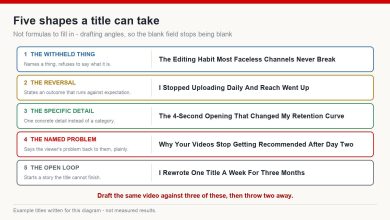
Treat them as two slots. The thumbnail carries the situation — one clear subject, strong contrast, very few words, an emotion legible at the size of a postage stamp. The title carries the part the image cannot: the specifics, the question, the promise. If the thumbnail already says “abandoned house”, the title should not say “abandoned house” again. Together they should give a viewer more than either alone.
Study Channels, Not Videos
Competitor research goes wrong when it turns into copying a single video. Open a channel that is working and extract five things instead:
- Which topics appear again and again — that is what their audience keeps rewarding
- Which format holds attention longest for them
- How they open a video, in the first fifteen seconds
- What is systematic about their thumbnails — the layout, not the picture
- How often they publish, and whether that has changed recently
That gives you a model of what the audience values. Rebuilt in your own style, it becomes a channel. Copied directly, it becomes a slightly worse version of theirs, which the audience already has.
Where AI Helps and Where It Flattens Things
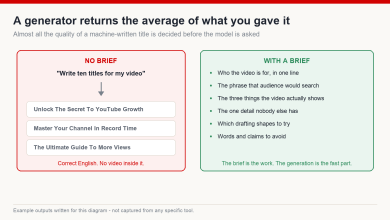
AI tools have genuinely changed how fast the early stages go. Topic research, competitor summaries, outlines, alternative title options, storyboards — the work that used to eat an afternoon now takes twenty minutes, and that is a real gain.
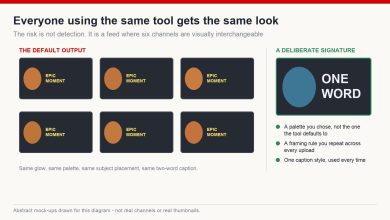
What has not changed is where a video’s advantage comes from. Firsthand experience, a specific point of view, the way you tell a story — those are the parts a model cannot supply, because it does not have them. Channels that hand the whole pipeline to a tool tend to produce content that is correct, complete and completely interchangeable.
Using AI is not against the rules. Producing low-value content is a different question, and disclosure expectations for synthetic media are real and can change. Read the current policies rather than a summary of them, including someone else’s summary, this one included.
How to Tell Whether Any of This Is Working
Judge changes against your own recent history, not against benchmarks from a blog post. Take the median of your last ten uploads, and compare a new video to that median on two things: how many people clicked, and how many were still there a minute later. Those two numbers together tell you whether a change helped.
Two honest caveats. Results vary enormously by niche, audience and season, so a number that means success on one channel means nothing on another. And YouTube changes how it distributes content, so a tactic that works this quarter is not a permanent law. Building a library that serves a real audience is the part that survives those changes.
Frequently asked questions
Should I stop uploading frequently? No — but make each upload a different question rather than the same one repeated. Frequency without variation stops teaching you anything.
Is it better to make videos in English? It depends on whether you can genuinely serve that audience. Higher-value ad markets are real, and so is the disadvantage of writing for people whose references you do not share.
Thumbnail or title — which matters more? They are one unit. The thumbnail usually gets seen first; the title is what converts the look into a click. Improving one while ignoring the other wastes the work.
Is there a formula that makes a video go viral? No. Topic demand, execution, retention and timing all contribute, and the last one is not under your control. What you can control is publishing videos that are worth the click when one does land.
The Short Version
Views do not come from volume. They come from knowing which audience you serve, validating that the demand exists before you produce, building a library where each video has a job, packaging so the thumbnail and title do different work, and improving against your own numbers rather than someone else’s.
If you are building faceless channels for English-speaking audiences and want that whole system in one place, that is what I write about at mmoyoutube.com.